Building a Career in Urban Sustainability and Digitalisation
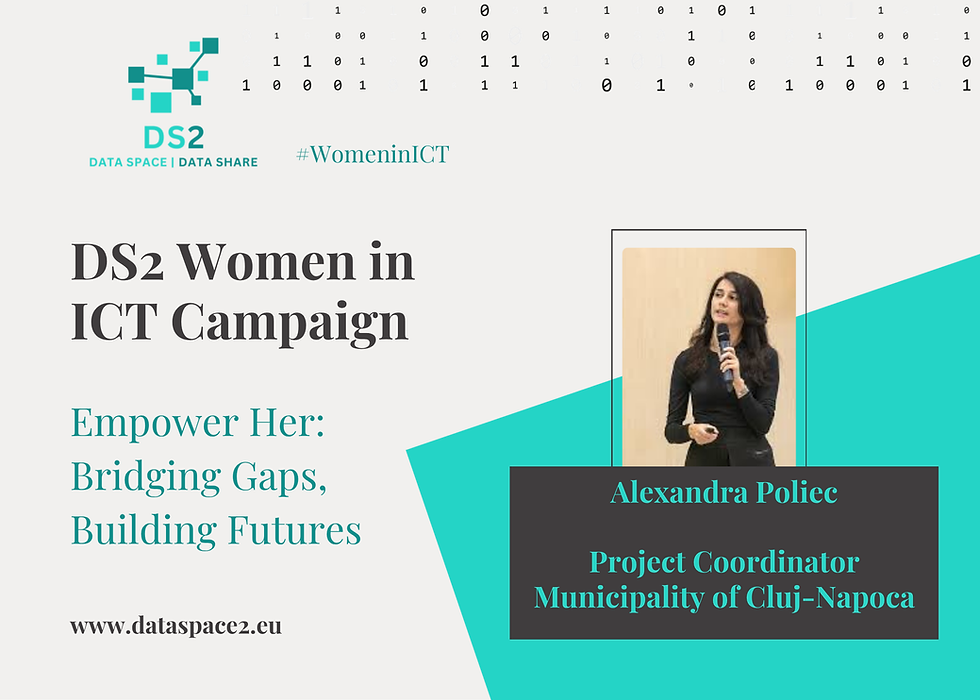
Please share a short biography
My name is Alexandra Poliec and I am a Project Coordinator at the Cluj-Napoca City Hall, where I work on European projects focused on climate neutrality, digitalisation and urban innovation. I hold a Bachelor’s degree in Management and a Master’s degree in Audit and Management of European Funds. I have experience in both the private and public sectors, and I am currently involved in projects related to sustainability, citizen engagement, and urban development. Through my work, I collaborate with international partners and contribute to shaping more sustainable and inclusive cities.
Please provide a short overview of your job and its relation to STEM. What is your current job? What is the field about?
I work as a Project Coordinator in the field of urban sustainability and smart cities. My role involves managing and supporting European-funded projects that focus on climate neutrality, digitalisation and citizen engagement.
I coordinate activities, monitor progress, and collaborate with international partners. In projects like DS2, I work with data from different sectors such as energy, mobility, and environment, contributing to solutions that help cities reduce CO₂ emissions. My work connects different fields and helps turn complex ideas into practical actions at city level.
Who or what inspired you to follow this career path / start this job?
I initially studied management, but through my work in European projects, I was exposed to topics like climate change, data and digital tools. Working on projects such as DS2 helped me understand how important technology and data are in solving real-world problems. I am also inspired by the women I work with in these projects. They are highly skilled, motivated and show that there are many opportunities for women in tech and innovation.
What does your typical working day look like?
A typical day includes meetings with international partners, coordinating tasks within the project team and following up on ongoing activities. I also work on reports and deliverables and I collaborate with colleagues from different fields such as IT, urban planning and environmental science. Some days involve organising workshops, events, or working directly with stakeholders and citizens. The work is dynamic and no two days are the same.
Please give an overview of your study path and how you got into this career. If you could start all over again, how you would change the career path? Has there been an educational experience (formal/informal/traineeship/...) that helped you? Did your colleagues follow similar study and career paths?
I studied Management at Babeș-Bolyai University, followed by a Master’s degree in Audit and Management of European Funds. I started my career in the private sector, working in accounting and audit, where I developed strong organisational and analytical skills. At the same time, I was involved in volunteering activities, which helped me gain early experience in teamwork and project coordination. Later, I transitioned to public administration and began working on European projects. Even though my studies were not directly related to STEM, I gradually moved into this area through practical experience, especially in projects involving data, climate and digitalisation. Since I started working on these projects, I have continued learning through additional courses and trainings. I have obtained a certification related to nature-based solutions (NBS) and I am also part of the European Climate Pact initiative. If I could start again, I would explore earlier topics such as sustainability and digital skills, but my experience shows that it is possible to enter this field step by step.
What are the professional & personal key skills needed to do your job?
Management - I plan, coordinate, and monitor project activities, ensuring that deadlines and objectives are met;
Personal and Social Skills - I involve citizens, organisations, and partners in project activities and ensure their input is considered; I collaborate with colleagues and experts from different disciplines to achieve common project goals; I quickly adjust to new topics and project requirements, especially in fast-changing fields like climate and digitalisation.
Communication - I work daily with international partners and stakeholders, adapting my communication to different audiences.
Analytical - I work with reports, indicators, and data from different sectors to support decision-making.
What types of jobs & industry sectors can you work in, with your skills?
With my background and experience, I can work in different fields such as public administration, European institutions, consulting, NGOs, or international organisations.
There are many opportunities in areas like sustainability, smart cities, digitalisation and data-driven decision-making. These fields are growing fast and offer the chance to work on real challenges that impact communities and the environment.
My current role also allows me to continue developing in directions such as project management, climate policies, or innovation in urban development.
What are the main challenges in your job?
The biggest challenge was the lack of trust in the early years (2013-2016) when the environment was skeptical of collaboration. I also had to overcome the absence of national policies for cluster development, meaning sustainability depended entirely on our ability to find creative funding and serve the needs of our members.
What is your advice to students?
My advice is to stay curious and open to learning. You don’t need to have everything planned from the beginning. Even if your studies are not directly in STEM, you can still build a career in this area through projects, volunteering, and practical experience. Your involvement really matters. In many of the projects I work on, we collaborate with students and give them the opportunity to learn, contribute and discover their interests in practice. These experiences can make a big difference in shaping your future path. Don’t be afraid of topics like technology or data. They might seem complex at first, but they are just tools that can help you create real impact in the world.
How can teachers and parents support their students / children?
Teachers and parents can support young people by encouraging them to explore real-world topics such as climate change, cities, and technology. It is important to create a supportive environment where students feel confident to ask questions, try new things and make mistakes.


Comments